

Since 2019, visitors to Remai Modern have gathered near both a literal and figurative fire to hear from Indigenous community leaders, experts, and artists. The Fireside program—led by Lyndon J. Linklater, Remai Modern’s Indigenous Relations Advisor—offers unique opportunities to explore important themes in an inviting, casual setting.
“I find the public is very curious about Indigenous culture,” said Linklater. “When I think about the First Nations culture, there’s so many facets of it that’s just so interesting. Like even to me, there’s so much I still have to learn and want to learn more about.”
In 2025, Linklater hosted four Fireside events at the museum, all of which were generously presented by SaskEnergy, now in its third year of supporting this unique Remai Modern program.
Here, Linklater reflects on the conversations that took place this year.
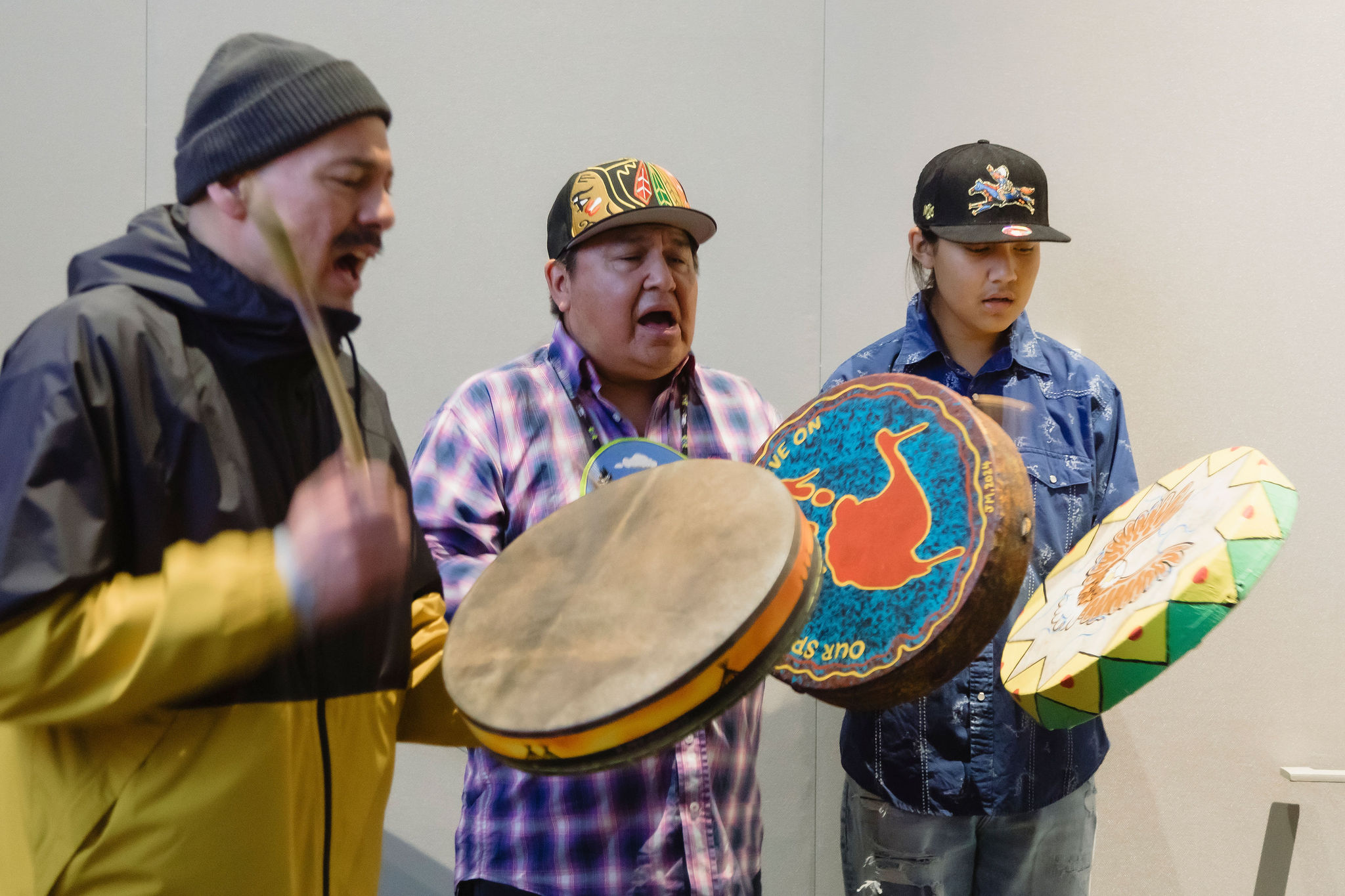
April 3: Lead singers
In First Nations cultures, Lead Singers are called upon to sing traditional songs at Ceremony. During Pow Wow, Round Dance, Sun Dance, funerals and weddings (to name a few), Lead Singers will know the songs to sing.
Marc Okihcihtaw and Allan Bonaise are recognized and honoured Lead Singers from Saskatchewan. They travel the province, the country, and the United States in their capacity as Lead Singers. At Fireside, they shared songs and stories about their work.
Marc Okihcihtaw is from Sturgeon Lake First Nation and Allan Bonaise is from Little Pine First Nation, both in Treaty 6 Territory. At a young age, they started learning the songs and protocols of Plains Cree culture. Today, they are recognized as Lead Singers. Both singers belong to Young Scouts, a drum group that was nominated for a 2024 Traditional Indigenous Artist or Group of the Year.
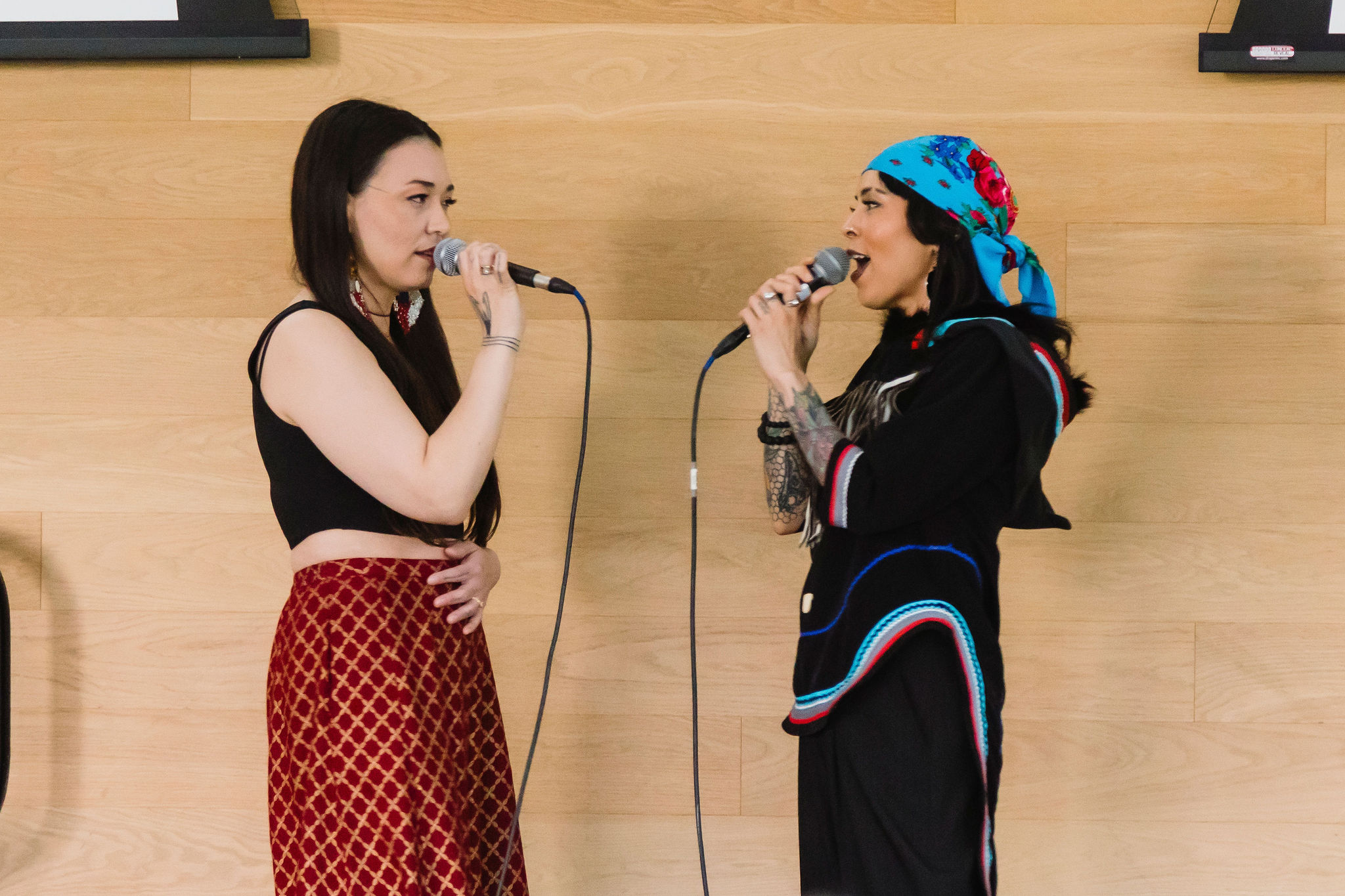
May 22: Silla
Charlotte Qamaniq from Iglulik and Cynthia Pitsiulak from Kimmirut, Nunavut have been performing together since 2005. Known for their mesmerizing and powerful performances, Silla blends the rich traditions of Inuit throat singing with a wide range of contemporary music genres.
“So many people, including myself, are simply unaware of the Indigenous culture with respect to the Inuit people and to hear their stories and then to hear their music—their explanations—are fascinating,” said Linklater.
Their name, Silla, comes from the Inuktitut word Sila, which encompasses weather, land, spirit, cunning, and intelligence—honouring the deep cultural roots and spiritual power of their practice. In a world that once tried to silence these sounds, Silla’s music stands as a vibrant expression of resilience and cultural pride. Silla has received two JUNO Award nominations for their work as Silla and Rise and are winners of two Summer Solstice Indigenous Music Awards.
This Fireside was held in conjunction with the opening of Tarralik Duffy: Klik My Heels, an exhibition by the Saskatoon-based, Sobey Art Award-nominated artist.
September 25: Plains Cree Syllabics
In southern Plains Cree there are 67 symbols and each symbol represents a sound. When the symbols are written together, words in the language can be spoken. At this Fireside, Linklater was joined by Audrey Ben from the Makwa Sahghaiehcan First Nation (Loon Lake) in Treaty 6. The mother of nine, grandmother and great-grandmother has a background in education and has been a teacher for many years. Presently, Audrey teaches Nehiyawewin (Plains Cree language) at Wahkotohwin School in Saskatoon.
“The audience enjoyed the homework that I gave them. I just went out in the audience, and I gave them these symbols that I had pre-written. They had to decipher them based on this syllabic chart. And then they would get the answer, right. And then, just like little kids, I know how a teacher must feel when they’re teaching kids how to write,” Linklater said. “I just see the look on their faces when, when they would get the answer right.”
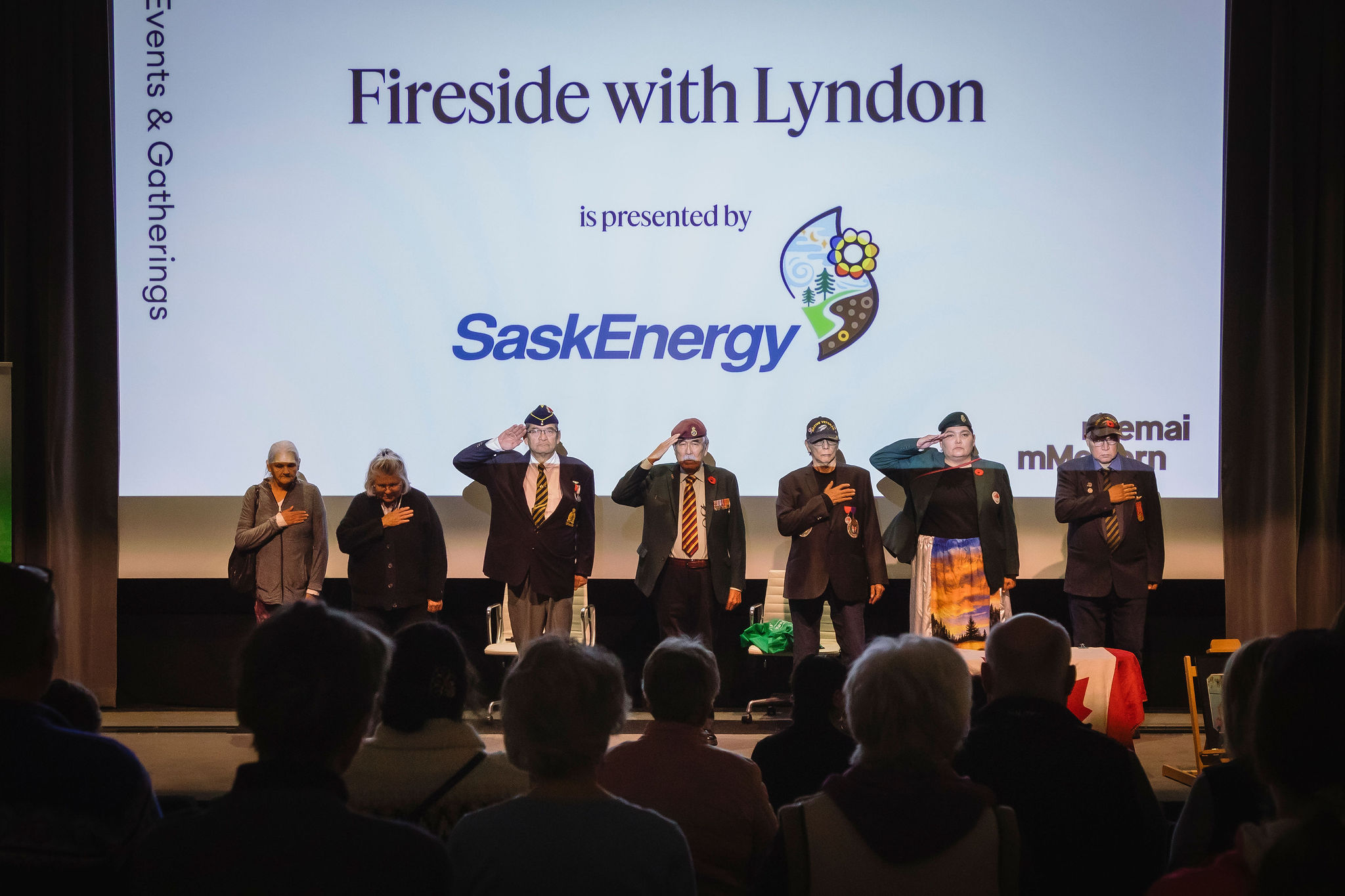
November 8: Cree Code Talker
This Fireside on Indigenous Veterans Day included the short documentary Cree Code Talker as well as a brief Ceremony with Indigenous Veterans and audience conversation. Bonaise and Okihcihtaw from the April Fireside returned to perform an Honour Song, Flag Song, and Victory Song for the veterans in attendance.
“We finished off the year honoring our Indigenous veterans for the National Indigenous Veterans Remembrance Day. And certainly that’s something that I think we want to continue here at the museum. People learned about the history with respect to veterans and the role they played and how they were treated unfairly.”

Future Firesides
Over the past few years, Linklater has noticed Fireside regulars who don’t miss an event. He’s happy to see word spreading about his program.
“The whole idea behind this Fireside, it’s like a visit, you know, we’re visiting one another. And that’s the best way to learn and to appreciate each other is when we just sit and visit and we ask questions to one another,” he said. “I really enjoy the non-Indigenous audience members who want to learn and they ask questions. They get blown away and they’re so curious and they really enjoy it. And I meet strangers, you know, on the street. ‘Hi Lyndon.’ And I don’t know who they are. And they’ll say, “I come to your Fireside.’”
Linklater is already thinking of ideas for 2026 and how he can connect the Fireside program with exhibitions and programs at the museum. One topic that stands out is the 150th anniversary of the signing of Treaty 6.
Though Linklater has no shortage of speakers and topic ideas, he also encourages audience suggestions. If you have an idea for an upcoming Fireside please email info@remaimodern.org.
And because no interaction with Linklater would be complete without a good dad joke, we leave you with this:
“You’ve probably heard this one, but apparently Sylvester Stallone is on his third marriage. Did you know that? Yeah. Yeah, well, the first one was Rocky and the second one was Rocky too.”