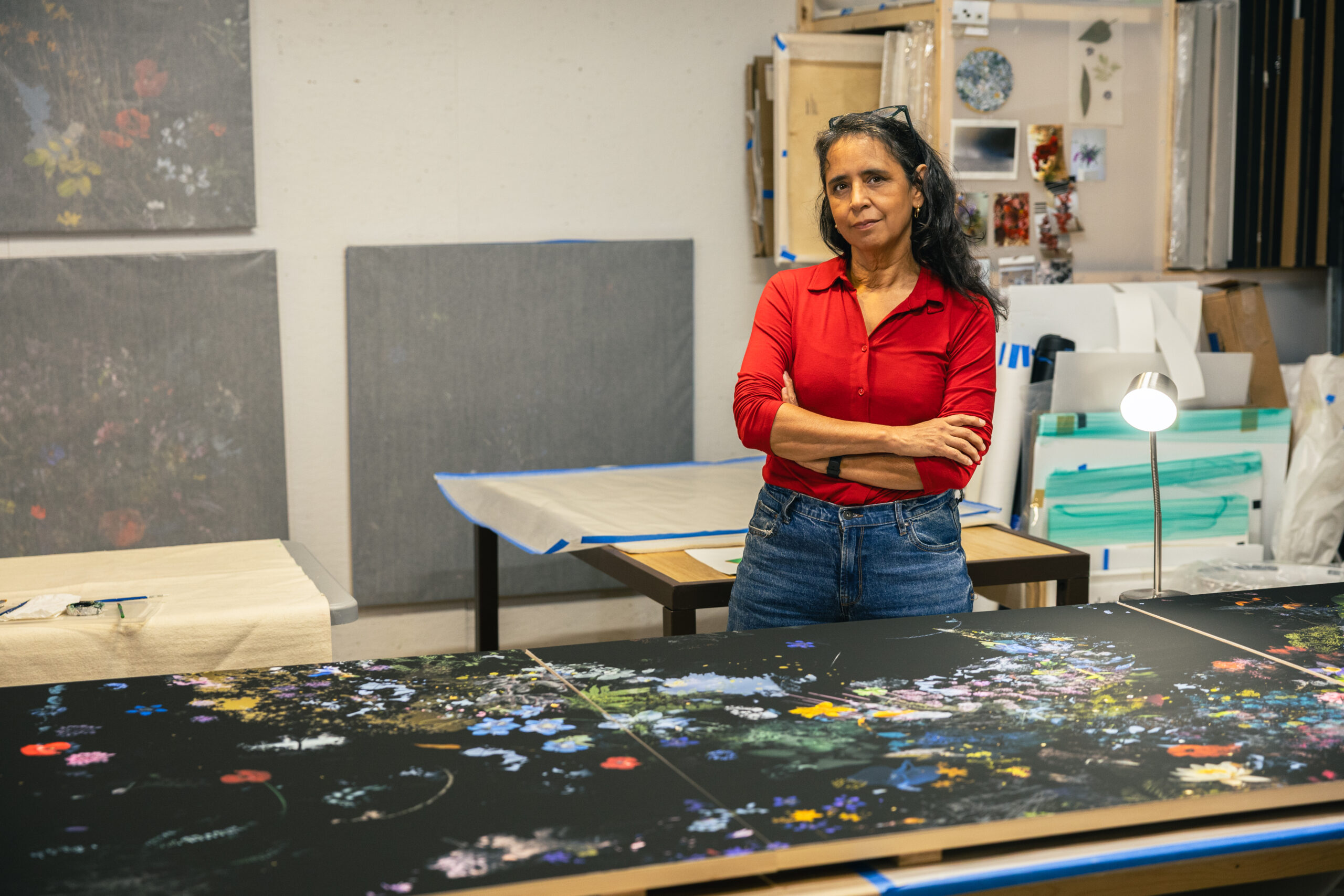

For visual artist Gabriela García-Luna, the act of making isn’t simply about crafting a finished work. Instead, it’s an ongoing conversation. The land, memory, movement, and the layered geographies she has crossed throughout her life all speak through her practice. Her contribution to the Remai Modern exhibition Great Plains Series: Points of Return – Spaces of Departure continues a practice defined by hybridity, curiosity, and a deep sensitivity to the natural world.
Born in Mexico City and now based in Treaty 6 Territory, Saskatchewan, García-Luna’s practice is grounded in photography, but untethered from its traditional boundaries.
“I use photography not in the typical sense of documenting what we see, but I use it as a tool to draw in a way… to layer, and understand the different levels of reality that I experience.”
This layered approach is notable in every part of her process. She walks, she gathers, she photographs. She observes the sky, the river, the bend of a flower stem. Each of these encounters for her becomes material.
“The photographs carry for me a kind of DNA of experience and of a place and of the elements I’m photographing,” she says.
In her studio, these fragments expand. Drawings, marks, printmaking, video, and installation interweave with her photographic elements until the boundaries between mediums dissolve.
“The work ends up being… a mix of things. It’s a hybrid work and I think hybridity is at the essence of our own experience of nature itself.”
Finding Home in Many Places
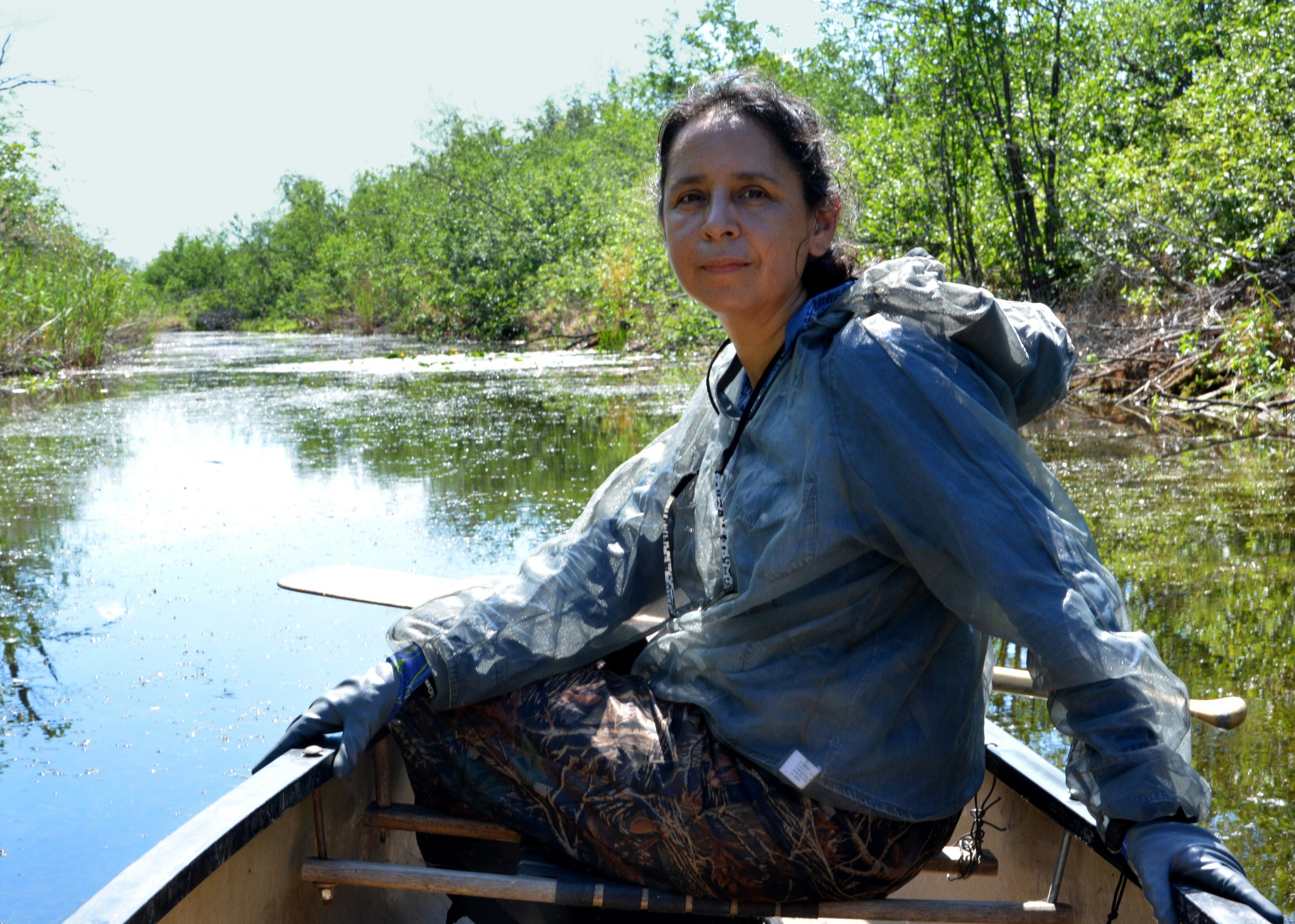
Movement, whether across land, cultures, or inner states, also sits at the heart of García-Luna’s practice. Her years living between Mexico, India, and now Saskatchewan shape how she sees and how she makes.
“My work has a lot of elements of my own path of migration… I found that my connection to nature was a way to feel at home no matter where you are. And photographing was a way to connect to the place where I was.”
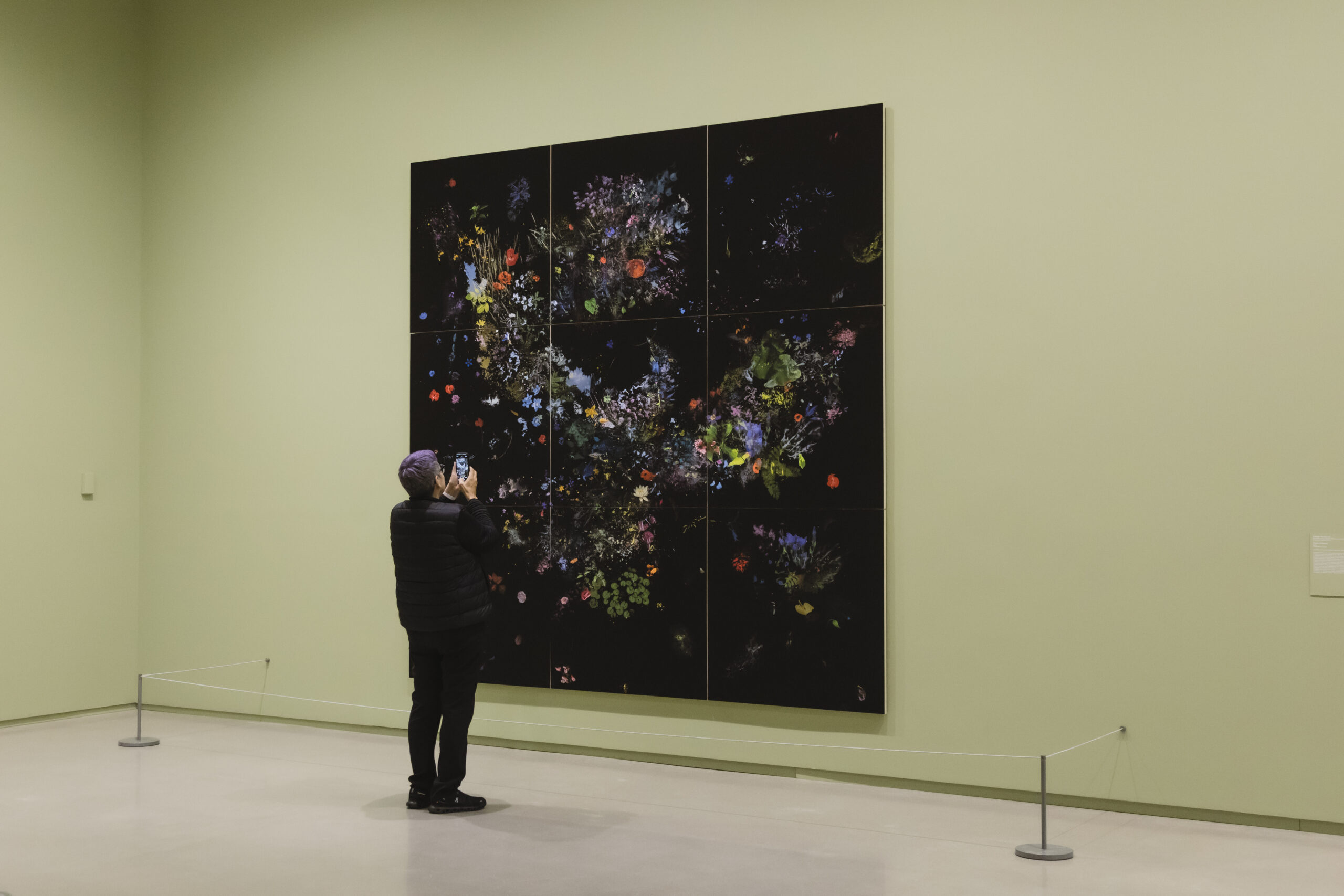
Her images, then, are not traditional records of place. They are emotional and perceptual traces—what she calls “the DNA of a place.” When these fragments come together in her large-scale works, multiple geographies converge. Flowers from one region speak to skies from another. Botanical details taken years apart occupy the same plane.
This form of collage creates a sense of interconnectedness that reflects her understanding of nature.
“We are not one single thing, but we are a multiplicity… and nature teaches us that. It teaches us the inclusiveness of all different things and the constant growth and evolution of things,” she says.
Walking With the River
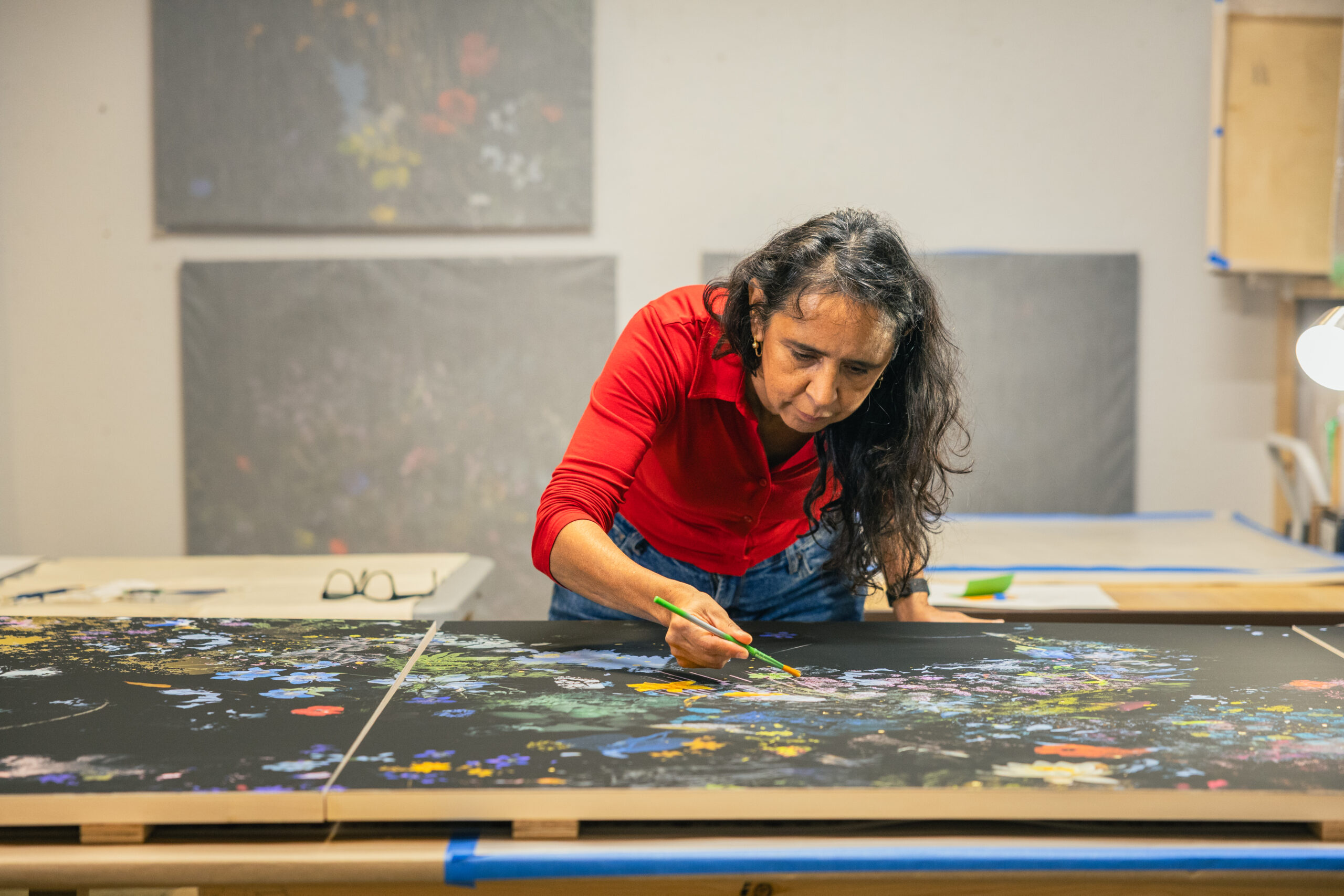
Since relocating to Saskatchewan, García-Luna has deepened her research along the South Saskatchewan River. She sees the river as a source of life, history, and movement that anchors both prairie ecology and the human communities that have lived alongside it for generations.
“I found that Saskatchewan is just deeply connected to the river, which is the vertebral column… the Saskatchewan River is really at the core of life of this culture.”
Her explorations along the river have become a way of understanding the territory she now calls home. She travels to different points along its length, learning from local communities and the flora that flourishes there.
“For me it’s a way to understand and to greet the place… a relationship of appreciation, beyond knowing in the scientific sense. It’s a knowing by experience.”
Points of Return — Spaces of Departure
The exhibition’s thematic frame of movement, exchange, returning and departing, resonates deeply with García-Luna.
“This constant movement of returning and going is nature itself and is natural in human experience as well. Geography is not just political territory, but layers of experiences, memories, meetings with people, with land, with entities in the land.”
Her work embodies this idea: multiple pasts, encounters, and landscapes merging into a single composition that feels both familiar and unplaceable. In this way, her work becomes its own geography. One that resists borders in favour of relationships.
A Practice in Motion
García-Luna describes her creative process as restless, and full of discovery.
“There’s always something you want to explore. Sometimes exploring is not just walking. It’s wanting to get there and sit there, and contemplate from that point of view.”
For her, making is a journey without a fixed destination. Ideas accumulate. Some unfold immediately; others wait in what she calls “a little bag” for the next exploration.
“The journey of doing it is a process of discovery and of self-knowledge… artwork is always like that.”
As she looks ahead, García-Luna sees expansion, something evident through her large new work created for Points of Return – Spaces of Departure. She wants to explore larger forms, larger spaces, and a continued commitment to experimenting across mediums.
“I have dreamt of having my work presented in a larger scale and a beautiful space… so this is the part where I’m going now. And who knows, tomorrow. It’s always a journey of discovery.”