
Remai Modern is committed to reconciliation through education and action, and foregrounds Indigenous perspectives and self-determination throughout the organization. Remai Modern has an obligation to work toward greater understanding and improved relationships with Indigenous peoples and seeks to foreground Indigenous perspectives throughout the museum while being responsive to requests and ideas for change.
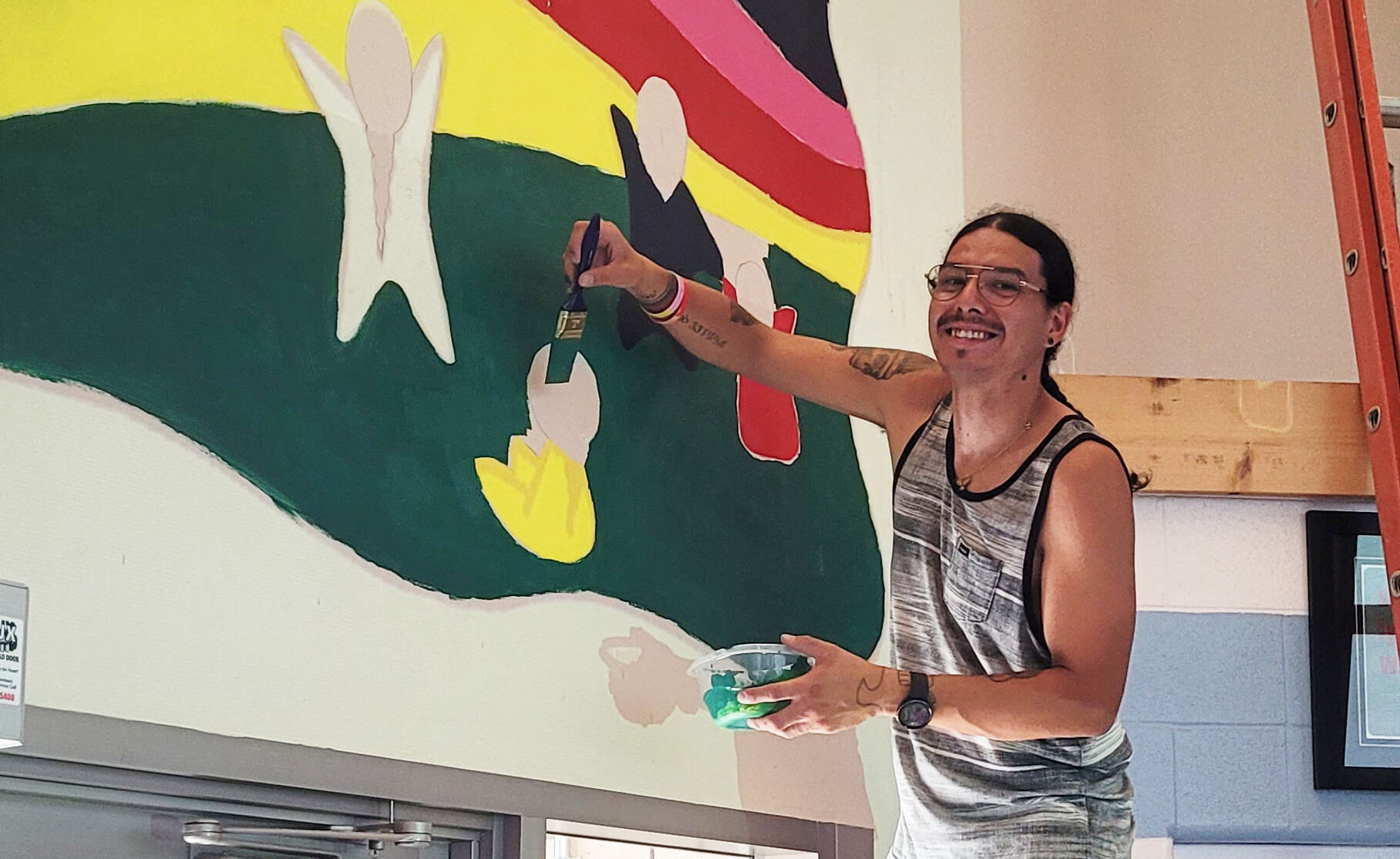
The mural project was developed as an artist mentorship that involved designing and painting large-scale artworks on the walls of Charles Redhawk Elementary School. James Desjarlais (artist) and Roberta Bear (principal) worked together to plan the designs and choose colours. Kas Rea (Remai Modern) and Danaka Stromberg (Intern, Remai Modern) assisted James with taking his digital designs and transferring them onto the walls and mentored him on how to prep the space before painting. They used acrylic paints to bring the murals to life, making sure to prepare and seal the surfaces so the artwork would last a long time.
Throughout the project, the team focused on creativity, teamwork, and learning new skills. They also interacted with students and staff at the school, who were excited to see the murals take shape. The project was not only about painting but also about building connections, sharing knowledge, and creating something meaningful for the school community.
Make more projects like this possible – Donate to Remai Modern
Charles Red Hawk Elementary School on Whitecap Dakota First Nation and Remai Modern have fostered a significant relationship over the last eight years. Art for Life programming provides enhanced art making opportunities in schools and manages to cover all areas of the curriculum using an art-based lens. Remai Modern is grateful for the opportunity to connect with people in such a special place, and we are honoured each year to continue to work together.

Mural #1 – Entrance of CRH Elementary School
Q: Why are stars, children, the land, and tipis featured in the entrance mural?
Roberta Bear: The stars reflect Dakota identity… Dakota are Star People. I want students to understand they’re part of the universe and deeply connected to it. The land in the mural reminds us to respect and care for the earth, which sustains us. The tipi represents our school as a home and family. These elements help students understand their identity, responsibility to the land, and connection to each other.
Q: Why were certain colours used in the mural?
Roberta Bear: We refrain from using black in school spaces because black represents death and can feel harsh. Instead, we use softer tones like blue. While the medicine wheel typically includes black, red, yellow, and white, the Dakota Elders in the community adapt this respectfully for children.
Q: Tell us about the mural from an artist’s perspective.
James Desjarlais: Roberta had a powerful vision, and I was honored to bring it to life. The seven stars in the mural represent the Seven Council Fires a key governance structure in Dakota culture. The children reaching for the stars show how important our youth are they are the future of our culture. The colours represent the medicine wheel, but instead of black, we used dark blue out of cultural respect. This project was deeply meaningful and pushed me as an artist. It was a beautiful, community-supported experience.


Mural #2 – Sensory Room / Stage Area
Q: What’s the meaning behind the flower and handprint mural in the sensory room?
Roberta Bear: This space is calming and used by all students. The vine and flowers represent growth, connection, and our learning family. The handprints show that every child is part of our school’s shared journey. It reflects how we’re all connected—to each other, to the land, and to the universe.
Q: What inspired the floral design on the stage mural?
James Desjarlais: I was given creative freedom and chose a floral design because that’s my specialty. The flower and vines represent the children growing—our job as a school is to tend to this “garden.” Including the students’ handprints made it personal and fun. I also help run the school garden, so connecting that work to this mural made it even more meaningful.

Indigenous Programs Coordinator, Kim Bird, continues to find new ways to bring the focus of museum engagement and partnership activities beyond formal museum spaces by going into the community.
“What I liked most about this project was offering the mentorship aspect and creating beautiful works of art in front of children. I really wanted them to be inspired by watching a space transform with colours and design. I wanted them to witness the artistic process and feel a sense of pride in their surroundings. I want every child to know that growing up to be an artist is an option; a new doorway to walk through, a success that others may not see as important.” Kim Bird, Indigenous Programs Coordinator, Remai Modern.

Artist Bio
James Desjarlais is an Nehiyawewin/Anishinaabe graphic designer and artist, based out of Saskatoon, Saskatchewan. With over 15 years of experience in graphic and art design, James specializes in digital artwork, many of which are featured across Turtle Island.
Every art piece James creates is inspired by the lessons and teachings passed down to him from his elders and ancestors. He has been greatly inspired by his own personal history with the residential school system, and the damage systemic racism has caused. Through art and expression, James believes that we can heal and change the world.
As an Indigenous artist, James has been taught the importance of star knowledge; every constellation is full of history, each with their own lessons and stories. For James, creativity is more than self-expression—it’s a way to restore, remember, and reimagine.
A special thank you to TD Bank Group for generously supporting this program.